
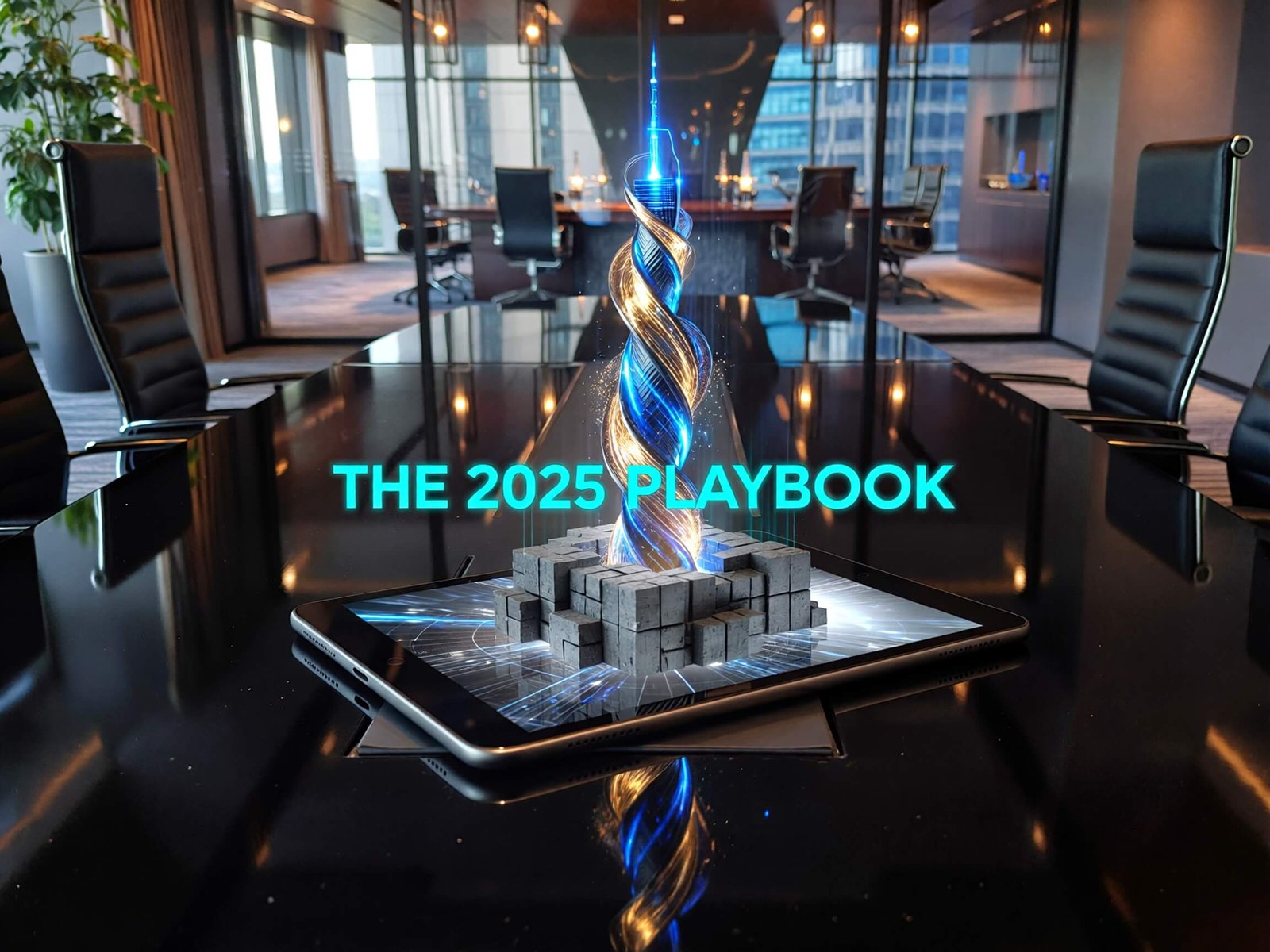
The nature of corporate strategy has changed, irrevocably. In a world defined by the exponential speed of technology and radical market volatility, the traditional methods of strategic planning—the rigid annual cycles, the slow, exhaustive audits, and the reliance on intuition—are not just inefficient; they are structurally incompatible with competitive survival.
The year 2025 marks the definitive end of the “Old Rules.” The playbook for success is being rewritten by the necessity of integrating Artificial Intelligence (AI) not as a technological add-on, but as the core engine of the enterprise. This requires a new strategic partner—the specialized AI Consultant—who is equipped to dismantle the structural inertia and strategic lag that paralyze modern organizations.
The core crisis is time. The competitor who learns faster wins the market. The goal of AI consulting is therefore not to deliver a static strategy, but to enforce speed of execution, continuous iteration, and structural agility. This guide breaks down the four core strategic shifts that define the new corporate playbook, revealing how the modern AI adviser acts as the essential catalyst for transformation.
Old rule 1: strategy is an annual event (new rule: continuous iteration)
The most fundamental flaw of traditional corporate strategy is its assumption of stability. Annual planning is structurally incapable of responding to AI-driven market volatility.
the flaw: annual planning assumes stability
Corporate strategy, historically, followed a “waterfall” model: planning in Q4, executing for four quarters. AI guarantees that the market will shift, technology will upgrade, and competitive moves will occur within the first three months of execution. A strategy built on data from six months prior is obsolete the moment it is printed. This lag introduces massive competitive risk.
the AI consultant’s role: implement continuous strategic refinement
The modern AI consultant introduces the agile strategy ethos. Strategy becomes a sequence of high-velocity sprints, focused on generating immediate, measurable results (MVAs – Minimum Viable Actions). The consultant designs a system where the organization can test hypotheses, measure market feedback, and correct the strategic trajectory in short, controlled cycles (weeks), rather than waiting for the next annual review. This transforms strategy from a static document into a dynamic, living system.
impact: reducing strategic lag
By replacing the monolithic annual plan with continuous strategic refinement, the company radically reduces its strategic lag. Capital is continuously allocated to proven, high-impact initiatives, ensuring resources follow results, not outdated bureaucratic mandates.
Old rule 2: expertise is internal (new rule: fractional cognitive leverage)
The complexity of AI means that no single organization can afford to hire and retain all the specialized talent required for competitive parity.
the flaw: relying on internal skills alone
Building a top-tier AI team internally requires immense capital investment (salaries, infrastructure, training) and time. The skills required (MLOps engineers, ethical AI governance specialists, prompt architects) are too niche and too expensive for most businesses to maintain permanently. This reliance on internal capacity creates an unavoidable skills gap bottleneck.
the AI consultant’s role: provide fractional cognitive leverage
The adviser solves this by providing fractional cognitive leverage. Companies gain immediate, expert access to highly specialized knowledge—like the cross-sectoral pattern recognition inherent in the HVHI model—without the cost or time required for permanent hiring. The consultant acts as a cognitive cache, accelerating internal decision-making by supplying instant, battle-tested expertise precisely when and where it is needed.
impact: eliminating the skills gap bottleneck
This model eliminates the skills gap bottleneck, ensuring high-quality, specialized decision-making is accessible quickly and affordably. The internal team is freed up from the pressure of knowing everything and can focus on execution, while the external adviser handles the complex strategic synthesis.
Old rule 3: strategy is qualitative (new rule: data-driven objectivity)
Traditional strategic planning often relied on qualitative intuition, lengthy written analyses, and subjective consensus—the domain of strategic “fluff.”
the flaw: subjective strategy is slow and prone to error
Strategy based on subjective consensus or intuition is inherently slow and prone to political friction. Executives spend valuable time debating opinions and assumptions, leading to delayed decisions and strategic errors. Furthermore, strategies designed without immediate data validation are highly likely to fail upon execution.
the AI consultant’s role: enforce data-driven objectivity
The adviser instills a culture of data-driven objectivity. The strategic plan must be rooted in verifiable, measurable facts (KPIs). The consultant designs the diagnostic framework—the pre-work—to instantly filter out subjective “fluff” and present the executive team with the pure, objective data required for high-stakes decisions. This rigorous adherence to metrics reduces internal political friction and accelerates strategic alignment.
impact: accelerating alignment
By forcing decisions based on verifiable metrics (ROI, time savings, churn rate), the adviser eliminates internal political friction and the time wasted on subjective debate. The consensus is built not on opinion, but on objective evidence, significantly accelerating strategic alignment across internal silos.
Old rule 4: risk management is reactive (new rule: predictive governance)
In 2025, risk is systemic and predictive. Traditional risk management focuses on auditing past performance; AI risk requires anticipating the future.
the flaw: traditional audits are slow and backward-looking
Traditional risk management models focus on auditing past compliance (GDPR violation in the last quarter) and documenting previous mistakes. They are too slow to manage the primary risk in the AI age: unforeseen future failures (algorithmic bias, data drift, new regulatory enforcement). This reactive approach guarantees that the company will be caught off-guard by evolving threats.
the AI consultant’s role: implement predictive governance
The adviser transforms risk management by integrating predictive governance. The strategy focuses on proactive risk mitigation, deploying AI tools that continuously monitor critical risk signals (e.g., algorithmic bias, model drift, regulatory changes) proactively. Compliance moves from a documentation exercise to a dynamic, real-time security system.
impact: safeguarding capital and reputation
This predictive model safeguards brand reputation and avoids catastrophic legal and financial penalties before they materialize. The strategy protects shareholder value by focusing on de-risking the future through continuous, high-velocity monitoring and intervention.
The new mandate: execution speed as core competitive advantage
The traditional consulting model is obsolete. The “2025 Playbook” demands a fundamental shift in corporate DNA.
The AI Consultant is the structural solution that enforces the speed of execution—the single most important competitive metric. They transform the strategy from a static document into a continuous action system, accelerating the time-to-value and minimizing strategic lag.
The future corporate strategy is about continuous agility, eliminating structural inefficiencies, and accelerating the time-to-value. The ultimate mandate for modern enterprises is clear: master the speed of execution, or risk being outpaced by those who do.

Leave a Reply